You Paid to Be There and They Skipped It Anyway: The Dark Art of the Rock Setlist

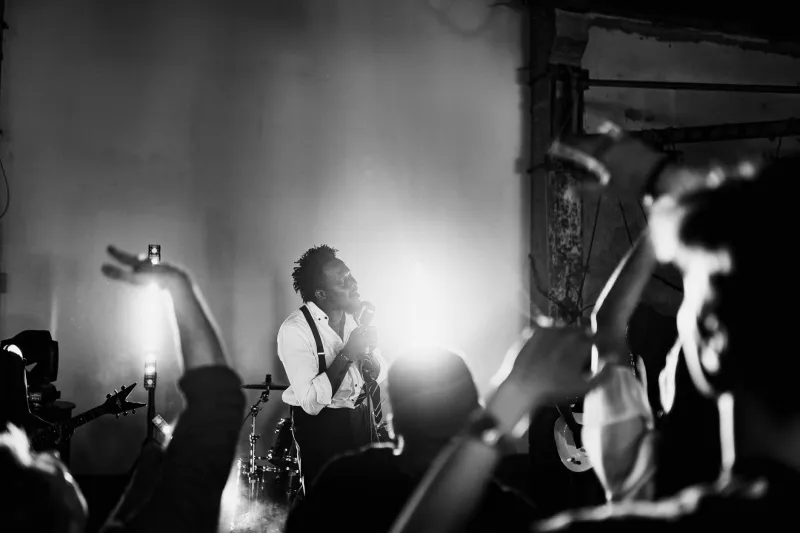
Let's set the scene. You've been a fan for fifteen years. You know every word to a deep cut off the band's second album — the one that never charted, never got a video, but meant everything to you in a way their radio singles never did. You bought the ticket the second it dropped. You made the drive. You stood in the pit.
They opened with the hits. They closed with the anthem. And that song you came for? Never happened.
Welcome to one of rock's most quietly infuriating traditions: the setlist that feels like it was designed by a marketing committee rather than a band that actually knows what their audience wants.
It's Not Laziness — It's Survival
Before you fire off the angry Reddit post, it's worth understanding why setlists look the way they do. Touring is brutal. Even for bands playing arenas, a ninety-minute set every other night for four months is a physical grind. Vocalists, in particular, treat their setlists like injury management plans.
"There are songs I genuinely love that I can't play every night without wrecking my voice by week three," one touring vocalist told us on condition of anonymity. "And once that happens, the whole tour suffers. So you make the call — play the fan favorite in Denver, lose your voice by Dallas, disappoint everyone the rest of the run. Or cut it and disappoint Denver."
It's a zero-sum game that fans rarely think about when they're staring at a setlist post on the band's Instagram the morning after a show they attended.
Beyond vocal health, there's the simple reality of muscle memory under pressure. A song a band hasn't rehearsed in two years might sound great in a soundcheck and fall apart in front of twenty thousand people. Touring musicians aren't just performers — they're athletes, and athletes don't run plays they haven't practiced.
The Politics Inside the Van (and the Tour Bus)
Here's where it gets interesting. Setlists aren't always democratic, and in bands with complicated internal dynamics, what gets played can become a proxy war for much larger conflicts.
When a band has multiple songwriters — or a dominant creative force and supporting members who feel sidelined — the setlist becomes a battlefield. Songs written by the guitarist who left under bad terms get quietly shelved. Album tracks that one member hates playing live get quietly rotated out. Nobody says it out loud. It just happens.
"I've been on tours where certain songs disappeared from the set and nobody acknowledged it," said one touring guitarist who has played with multiple major acts. "You could feel it. Everyone knew why. But you don't bring it up unless you want a three-hour conversation that solves nothing."
Data from setlist.fm tracking of North American tours over the past two years tells an interesting story. Bands on reunion tours or following lineup changes tend to lean harder on early-catalog material — not because the fans demanded it, but because it's neutral territory. Songs nobody has ownership disputes over. Songs that predate the drama.
The Algorithm Creep
There's also a newer force shaping setlists that didn't exist twenty years ago: streaming data. Some management teams and booking agencies are now actively consulting Spotify play counts and YouTube view metrics when helping bands build their sets. The logic is simple — if a song has forty million streams, you play it. If it has four hundred thousand, you probably don't.
The problem is that streaming data measures passive listening habits, not the passionate attachment of the fan who drove five hundred miles. The person who streams a band's biggest single in the background while cooking dinner is counted the same as the person who has listened to a deep cut eight hundred times with headphones on.
"Streaming numbers are a terrible proxy for what a live crowd actually wants," said one independent tour manager who works with mid-size rock acts. "I've seen bands drop songs with low play counts and watch the audience visibly deflate. Those 'low-performing' tracks are often the ones that mean the most to the people who are actually in the room."
When Fans Fight Back
The setlist grievance has become one of rock's most active fan communities. Sites like setlist.fm rack up millions of visits from fans tracking tour-to-tour variations, comparing notes, and building detailed databases of what bands play where. Fan forums light up after every show with detailed breakdowns of what was included, what was dropped, and what hasn't been played live in years.
Some bands have actually responded to this pressure. A handful of acts have experimented with fan-voted setlists for specific shows, or "deep cuts" nights where they deliberately avoid the obvious choices. The results are mixed — sometimes electrifying, sometimes a reminder of why certain songs got retired in the first place.
Others have doubled down in the opposite direction, locking in the same set for entire tours with almost no variation. It's efficient. It's rehearsed. And for the fan who sees the band twice in one tour, it's a little soul-crushing.
The Autonomy Argument
Here's the uncomfortable truth that sits underneath all of this: bands don't owe you the setlist you want. That's not a popular thing to say, but it's worth sitting with.
Artists have complicated relationships with their own catalogs. Some songs that fans love are songs the band finds embarrassing in retrospect. Others are tied to periods of personal pain that the musicians simply don't want to revisit every night in front of a crowd. A vocalist reliving a song about a specific breakup or addiction or loss — eight times a week, for months — is being asked to do something emotionally significant that the audience doesn't fully see.
"People forget that the song is ours before it's theirs," one frontman told us. "I'm glad it means something to them. But I'm the one who has to go back there every single night. Sometimes I just can't."
That's a real and valid thing. It doesn't make the disappointment of a skipped song sting any less. But it's worth carrying with you next time you're building your expectations on the drive to the show.
Making Peace with the Set
The healthiest relationship you can have with a rock show is one where you walk in with hope and walk out with whatever they gave you. The bands that keep touring — the ones doing it for real, not just cashing reunion checks — are mostly trying. They're balancing health, history, internal dynamics, and the weight of an audience's expectations every single night.
Sometimes the song you flew in for is waiting in the encore. Sometimes it's not. Sometimes the song they play instead turns out to be exactly what you needed.
And sometimes you just go home a little gutted and start planning the next show.
That's rock and roll. It was never supposed to be predictable.