Fabric Over Frequencies: How Band Merch Became the Real Money Machine
Let's be honest. The last time you walked out of a concert, you probably spent more on a hoodie than you did on the album that made you fall in love with the band in the first place. That's not an accident. It's not inflation, bad timing, or some weird coincidence. It's a calculated, industry-wide pivot that has fundamentally reshaped how rock bands make a living — and understanding it changes how you look at that merch table forever.
From Record Sales to Rack Sales
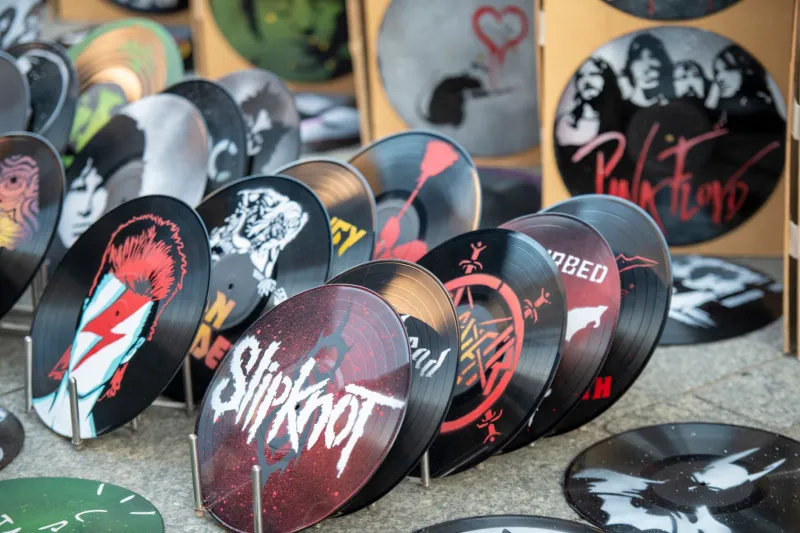
Back when physical albums ruled the world, a band could reasonably expect to see some meaningful chunk of revenue every time someone walked into a Tower Records and grabbed their latest release. That world is gone. Streaming payouts are notoriously brutal — we're talking fractions of a cent per play — and digital downloads never filled the gap that CD sales left behind. What filled it instead? Cotton. Polyester. Screen-printed graphics and embroidered logos.
Merchandise has quietly become the financial backbone of working rock bands across every level of the industry. For mid-tier touring acts — the kind playing 1,500-capacity clubs across the Midwest and Southeast — merch revenue can account for anywhere from 30 to 50 percent of total income on a given tour. For some smaller acts grinding through van tours and regional circuits, that number climbs even higher. The shirt isn't a side hustle anymore. It's the main event.
The Markup Math Nobody Talks About
Here's where things get interesting — and a little uncomfortable. A standard band tee, the kind printed on a Gildan or Bella+Canvas blank, costs somewhere between $4 and $8 to produce depending on quantity, color count, and print complexity. That same shirt hits the merch table at $35 to $45. A hoodie that costs $18 to manufacture? It's going for $55 to $70 at most major shows. The margin is enormous, and it's entirely intentional.
Nobody's necessarily doing anything wrong here — retail markup is retail markup — but the context matters. Fans are being asked to subsidize an industry that broke its own revenue model and handed the keys to Spotify. The t-shirt became a tithe, and most people paying it don't fully realize that's what's happening.
What makes the math even messier is the venue cut. Many mid-to-large venues take between 20 and 30 percent of gross merch sales as part of their deal with touring acts. So that $40 shirt? The band might actually pocket closer to $28 after the house takes its share. Suddenly the markup looks a little less predatory and a little more like survival math.
Limited Drops and the Scarcity Playbook
The other trend worth examining is the rise of limited-edition merch drops — the concert-exclusive colorway, the tour-only design, the pressing of only 200 units that sells out before the opening act finishes their set. Bands and their management teams have clearly been paying attention to what Supreme and sneaker culture figured out years ago: scarcity drives desire, and desire drives price.
It works. Bands like Ghost, Tool, and Metallica have built entire secondary market ecosystems around their merch. A Metallica tour shirt from a specific leg of a specific tour can flip on eBay for two or three times its original price within weeks. That's not a bug — for the people selling the shirts in the first place, it's a feature. It validates the brand, creates buzz, and keeps fans obsessively checking band websites for the next drop.
For the fan trying to actually wear the thing to work on Monday? It's a little exhausting.
Who's Actually Giving You Fair Value
Not every band is running a markup racket, though. Some acts have made a genuine effort to keep prices accessible while still generating meaningful revenue. Turnstile, for example, has maintained relatively reasonable pricing on their merch while keeping quality high — their stuff holds up, fits well, and doesn't feel like it was slapped together to cash in on a tour cycle. Bands like Knocked Loose and Spiritbox have built cult followings partly because their merch feels like it was designed by people who actually care about what fans are wearing, not just what margin they can extract.
On the flip side, there are legacy acts charging $65 for a tee that's printed on a thin blank with a design that looks like it was finalized in a 20-minute Zoom call. The name on the shirt is doing all the heavy lifting, and the fan is paying for the brand equity, not the product. That's a transaction, not a relationship.
The difference often comes down to involvement. Bands that treat merch as an extension of their artistic identity — who care about the design, the quality of the garment, the storytelling behind a limited piece — tend to produce stuff worth buying. Bands that outsource the whole operation to a merch company and sign off on whatever comes back tend to produce stuff that feels like exactly that.
The Collector Economy
Beyond t-shirts and hoodies, there's a growing world of rock-adjacent collectibles that's pulling serious money. Enamel pins, art prints, tour posters, signed lithographs, hand-numbered vinyl variants — the collectible layer of merch culture has created an entirely separate revenue stream for bands willing to invest in it. Some acts are hiring dedicated visual artists to create tour-specific artwork that becomes genuinely valuable over time. Others are partnering with companies like Fanatics or their own Shopify storefronts to run direct-to-consumer drops that bypass venue cuts entirely.
The smart bands are treating merch like a product line, not an afterthought. And honestly, for the ones doing it right, it shows.
What This Means for You at the Table
Next time you're staring down a merch table after a killer set, here's the framework worth keeping in mind. Is the price reflecting genuine quality and creative investment, or is it just leveraging your post-show emotional high? Is the band involved in what they're selling, or does it feel like a licensed cash grab? Are you buying something you'd actually wear, or something you're buying because you're still buzzing from the encore?
None of this means you shouldn't buy the shirt. Buy the shirt. Bands need the money, and the merch table is one of the most direct ways your dollars actually reach the people making the music you love. But go in informed. Know what you're paying for, know why the prices are what they are, and know the difference between a band that's building something and one that's just billing you.
The t-shirt economy isn't going anywhere. If anything, it's going to keep growing as streaming continues to hollow out traditional revenue. The least we can do is be honest about what's actually happening when we hand over two twenties and a five at the merch table.
Rock on — just maybe check the thread count first.