Four Walls, Infinite Tracks: How Bedroom Rockers Are Rendering Big Studios Irrelevant
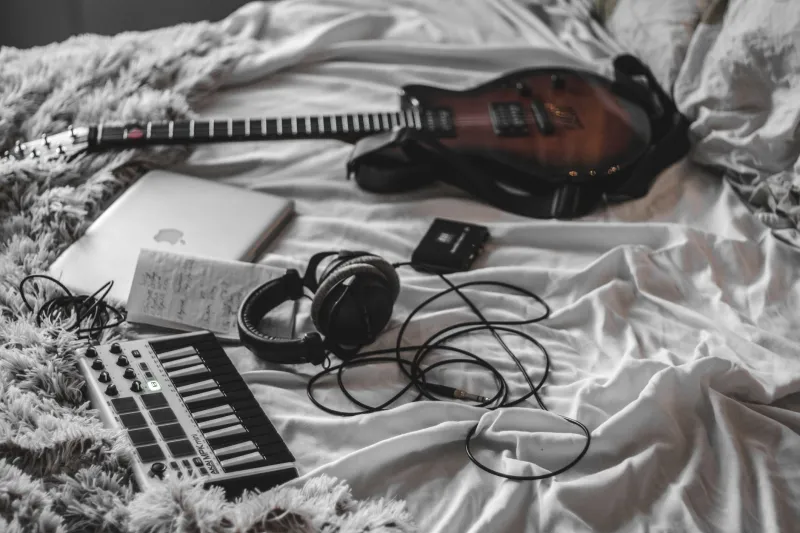
There's a running joke in certain corners of the rock world that the most important piece of studio equipment in 2024 isn't a Neve console or a vintage Neumann mic — it's a decent pair of headphones and a YouTube tutorial. Funny, sure. But it's also increasingly, undeniably true.
The professional recording studio was, for decades, the gatekeeper standing between a rock band and a real album. You either scraped together the cash, landed a label deal that fronted the budget, or you didn't make a proper record. Full stop. That dynamic has flipped so hard and so fast that a lot of industry veterans are still blinking in disbelief.
The Gear That Broke Down the Gate
Let's talk specifics, because the numbers are kind of staggering. A decade ago, even a modest professional recording session could run a band $2,000 to $5,000 per day once you factored in the room, the engineer, and equipment rental. A full album? You were easily looking at $50,000 to $100,000, and that was on the low end for anything with real production ambition.
Today, a home setup capable of producing genuinely competitive rock recordings can be assembled for under $1,500. An audio interface like the Universal Audio Volt 276 or the Focusrite Scarlett 4i4 runs between $150 and $300. A solid condenser mic — something like the Audio-Technica AT2020 or the increasingly beloved sE Electronics sE2200 — adds another $100 to $400. Slap GarageBand, Reaper, or Logic Pro on a MacBook that a lot of these kids already own, and you're recording.
For the more serious setups, plug-in suites from companies like Waves, iZotope, and Plugin Alliance have made mixing and mastering tools that once lived exclusively in $500-an-hour facilities available for the price of a monthly subscription or a one-time purchase that wouldn't cover a single studio day in 1998.
Bands Who Said 'No Thanks' to the Big Room
Ask around in the underground rock scene right now and you'll find artists who built genuine regional and national followings without ever setting foot in a traditional studio. Charlotte-based power-pop punk duo Hollow Static tracked their entire 2023 EP in a spare bedroom with moving blankets tacked to the walls. The record landed on several indie rock year-end lists and got them booked on a 30-date East Coast run.
"We genuinely could not have afforded a studio," says guitarist and vocalist Mara Kendall. "And honestly, after we started learning the software, we didn't want one. We could try something at 2 a.m. when the idea hit us. We could scrap a whole chorus and rebuild it without watching the clock. That freedom changed everything about how we write."
That sentiment — the freedom argument — comes up constantly when you talk to bedroom-recording artists. It's not just about money, though the money absolutely matters. It's about iteration, experimentation, and the removal of pressure that comes from not paying by the hour.
Denver-based garage rock outfit The Rusted Crowns went a step further, recording their debut full-length entirely on an eight-year-old laptop running Reaper, with guitar amps mic'd in a bathroom for natural reverb. The record sounds rawer than a polished studio job, but that's the point — and their fanbase of 40,000 Spotify monthly listeners apparently agrees.
What Home Recording Can't Fake (Yet)
None of this means the professional studio is dead. It means it's being forced to evolve, and fast. There are still things that a world-class room offers that a bedroom genuinely cannot replicate — at least not easily.
Live room acoustics for tracking full bands simultaneously, access to vintage outboard gear that costs more than most people's cars, the ears and instincts of an experienced engineer who's heard ten thousand mixes — these things still matter, especially at the upper levels of the industry. When a rock band with real label backing is cutting a major release, the professional studio still has a strong argument to make.
But that argument is getting harder to make to the artists who exist below that tier — which is, realistically, most working rock musicians in America.
How Studios Are Trying to Stay Relevant
The smarter studios aren't pretending the shift isn't happening. They're adapting. A growing number of mid-tier studios across the US have repositioned themselves as hybrid facilities — places where artists who've done preliminary tracking and arrangement work at home can come in for specific elements that benefit from a professional environment.
Drums are the big one. Getting a killer drum sound at home is genuinely difficult, and most bedroom setups either rely on electronic kits or drum samples. Plenty of bands now track everything else themselves and book a single day of studio time specifically for drums. It's cost-effective, practical, and it gets the one element that really benefits from a treated live room into the hands of a proper engineer.
Other studios have leaned into the education angle — offering production workshops, mixing masterclasses, and one-on-one sessions with engineers who teach artists how to get the most out of their home rigs. It's a pivot from selling time to selling knowledge, and for some facilities, it's working.
"We had to stop thinking of ourselves as the only option," admits one studio owner in Nashville who asked not to be named. "Now we think of ourselves as the best option for specific problems. That's a different business, but it's a surviving one."
The Sound of Now
There's a broader cultural argument embedded in all of this that's worth making explicitly: the aesthetic of bedroom recording has, in many ways, become the aesthetic of contemporary underground rock. The slight room noise, the dry guitar tone, the mix that prioritizes rawness over polish — these aren't accidents or limitations anymore. They're choices. They're part of the identity.
Listeners who grew up on lo-fi hip hop and bedroom pop don't hear a home-recorded rock track and think "that sounds cheap." They hear it and think "that sounds real." That's a massive perceptual shift, and it's one that the professional studio world hasn't fully reckoned with.
Rock has always had a complicated relationship with production gloss anyway. The genre's most visceral moments — the Pixies' Surfer Rosa, the Replacements' Sorry Ma, half of what came out of Seattle in the late '80s — were defined by what they didn't sound like as much as what they did. Bedroom recording fits neatly into that lineage.
Plug In Anywhere
The bedroom producer takeover isn't a threat to rock music. If anything, it's one of the healthiest things to happen to the genre in years. It means more bands are making records, more music is getting out into the world, and fewer gatekeepers are standing between an idea and an audience.
The professional studio will survive by finding its specific lane. The artists who couldn't afford that lane before are now making records anyway — and some of them are making records that genuinely rip. That's about as rock and roll as it gets.